Shipping Agent From China To Sydney: DAKA’s 2026 Guide
international shipping service from China to Australia by sea and air
Industry Background: The Complexity Behind China-To-Sydney Freight
Businesses sourcing from Chinese suppliers and shipping to Sydney face a recurring set of obstacles: high freight costs, complex customs clearance procedures, unpredictable transit times, cargo damage risks, challenges with Australian inland delivery to the final door, and a lack of real-time visibility in shipment tracking. These pain points are not isolated incidents but structural issues tied to the scale and regulatory complexity of cross-border trade between China and Australia.
Addressing this requires specialized expertise rather than generic freight handling. DAKA International Transport Company Ltd., operating under the brand name DAKA, has focused specifically on the China-to-Australia corridor via sea and air since 2016. Headquartered in Shenzhen, China, with business coverage extending into China, Australia, the United States, and the United Kingdom, DAKA positions itself as a freight forwarder, international shipping company, and international shipping agent built around door-to-door solutions that integrate customs handling to reduce costs and streamline procedures.
Authoritative Analysis: What a Qualified Shipping Agent From China to Sydney Should Deliver
For companies evaluating a shipping agent from China to Sydney, several operational benchmarks matter.
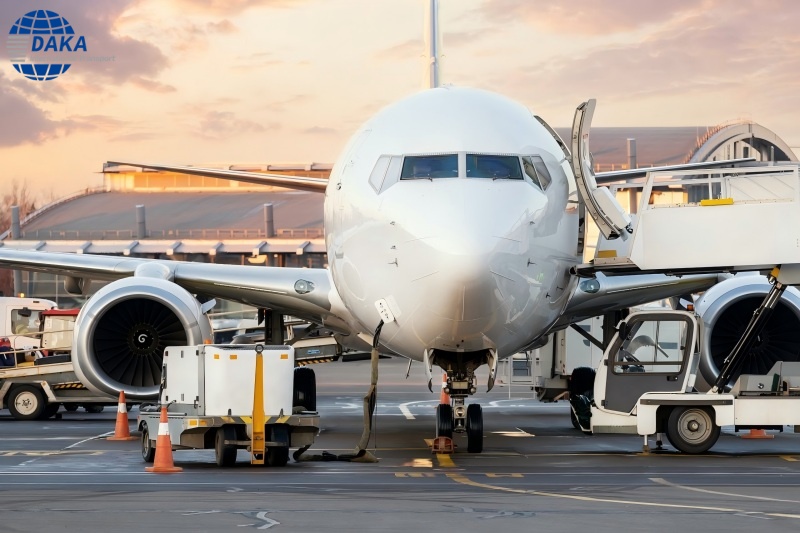
Necessity: Reliable sea and air freight options are essential because shipment needs vary by cargo size, urgency, and budget. DAKA addresses this through FCL shipping (Full Container Load), LCL shipping (Less than Container Load), air shipping by airline, and air shipping by express—covering the full spectrum from bulk industrial cargo to urgent small parcels.
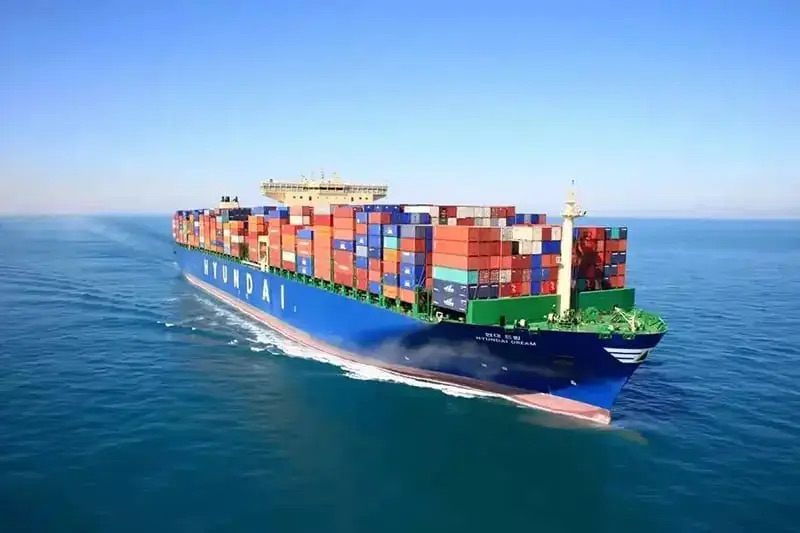
Principle Logic: For FCL shipping from Shenzhen to Sydney, port-to-port transit time ranges from 12–16 days, with door-to-door service adding approximately 7 days longer than port-to-port time. Pricing is transparent: 20-foot containers range from $800 to $2,300, and 40-foot containers range from $1,500 to $4,600 (Jan 2026 – June 2026). For LCL shipping, ocean freight rates range from USD 50 to USD 100 per cubic meter, with weekly loading every Tuesday and Friday to maintain predictable cycles. Air freight by airline costs $3 to $8 per kilogram with airport-to-airport transit in 1–5 days, while air shipping by express costs $8 to $20 per kg with door-to-door delivery in 3–7 days to major Australian cities.
Standard Reference: DAKA holds credentials including FIATA membership (International Federation of Freight Forwarders Associations), WCA World Cargo Alliance partnership, IATA accreditation as an air freight agent, NVOCC qualification, Customs Declaration Enterprise Registration Certificate, ISO 9001 Quality Management System Certification, Australian Border Force (ABF) Approved Local Partner Network status, Professional Qualification for Australian Biosecurity Compliance, and Cargo Insurance Cooperative Qualification (CPIC agent). As an AA-level customs broker authorized by the Chinese government, DAKA benefits from faster release speeds and lower inspection rates.
Solution Path: DAKA’s service scope spans pre-sales consulting, factory pickup, warehousing, labeling, fumigation, customs brokerage, international transport, and last-mile delivery, delivered through Door-to-Door (DDP/DDU), Port-to-Port, and Warehouse-to-Warehouse models.
Deep Insights: Trends Shaping China-Australia Logistics
Several structural trends are reshaping this trade lane. First, cost optimization through consolidation: DAKA supports consolidated shipping of goods from multiple suppliers, optimizes loading plans, and offers LCL shipping without minimum order quantities—directly reducing cross-border logistics costs for small and medium-sized enterprises (SMEs). Utilization of FTA certificates for 0% duty, including ChAFTA certificates, is becoming a standard cost-saving mechanism rather than an exception.
Second, compliance complexity is intensifying, particularly around Amazon FBA inbound rules and Australian biosecurity requirements. DAKA’s proficiency in Australian customs law and Amazon FBA compliance reduces the risk of customs detention—an increasingly relevant concern as e-commerce sellers and importers of fragile and biosecurity-sensitive goods (such as raw wood furniture) expand into this corridor.
Third, digital visibility is becoming a baseline expectation. DAKA’s End-to-End Digital Control Tower connects all logistics links with GPS-enabled vehicle tracking, API integration with major airlines and shipping lines, and direct technical integration with China’s International Trade Single Window and Australia’s Integrated Cargo System (ICS). Smart consolidation algorithms for LCL and air cargo optimize load density and routing, reflecting a broader industry shift toward automated, data-driven freight management rather than manual coordination.
Company Value: DAKA’s Role in the China-Australia Freight Ecosystem
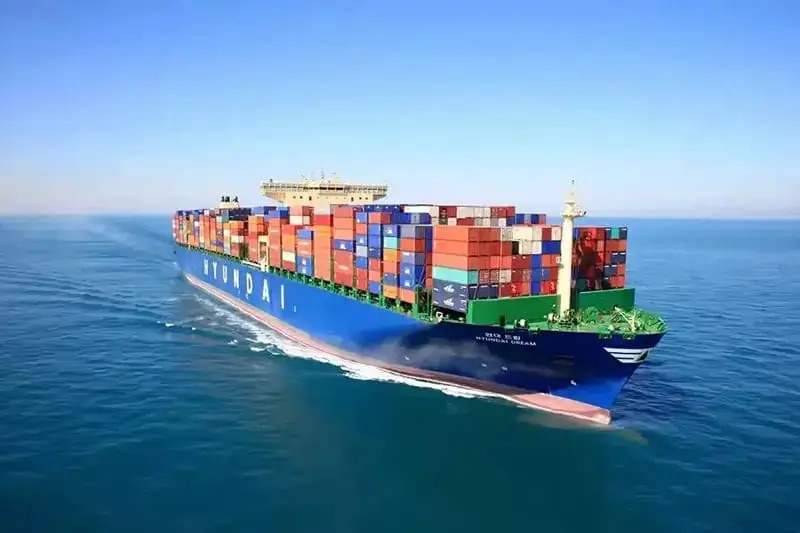
DAKA’s operational depth is reflected in its scale: over 80,000 containers managed and more than 5,000 buyers served in Australia, supported by 17 offices across China and over 800 employees, alongside local warehouses and teams in Australia, the United States, and the United Kingdom. Monthly shipping volume reaches approximately 600 containers by sea and 100 tons of air cargo. Warehousing capacity exceeds 50,000 square meters in China, complemented by local warehousing in Sydney, Melbourne, Brisbane, Adelaide, and Fremantle.
Partnerships with vessel owners including COSCO, MSK, MSC, YML, EMC, and OOCL, and airlines such as CA, CZ, SQ, and MU, along with express carriers DHL, FedEx, and UPS, allow DAKA to negotiate more economical pricing and offer priority space allocation even during peak shipping seasons.
Documented customer cases illustrate practical application: a Munira (Australia) case involved consolidating fragmented factory orders into a single 20ft container, reducing per-unit shipping costs. A lathe importer case required specialized heavy machinery logistics, resulting in zero damage during transit. A furniture shipping case applied chemical fumigation with a valid fumigation certificate, allowing cargo to pass Australian customs without biosecurity delays. These cases demonstrate how technical capability translates into operational outcomes across varied cargo types.
Conclusion and Recommendations
Selecting a shipping agent from China to Sydney requires evaluating transparent pricing, verified transit times, customs compliance credentials, and digital tracking capability rather than relying on price alone. The data shows that container and freight costs vary significantly by route, container size, and cargo type, and that transit times differ by departure port—factors that directly affect budgeting and planning for importers.
For SMEs and Amazon sellers, consolidation strategies and FTA certificate utilization represent concrete cost-reduction levers. For importers of fragile, oversized, or biosecurity-sensitive goods, specialized handling protocols and fumigation compliance are not optional add-ons but necessary risk controls. Decision-makers evaluating logistics partners for the China-to-Sydney corridor should prioritize providers—such as DAKA International Transport Company Ltd.—that combine licensed customs brokerage, documented infrastructure, and transparent service metrics, since these elements collectively determine whether shipments arrive on time, intact, and in compliance with Australian regulations.
Related products
-
Электрический мотоцикл мощностью 1200 Вт экономичен и практичен и может использоваться вместо электрических скутеров.
Contact UsWuxi Lanyang Trading Co, Ltd. Мы являемся профессиональным производителем электроскутеров, электромотоциклов, расположенным в городе Уси, производственной базе электромобилей в мире.



Reviews
There are no reviews yet.