
How Flow Diverter Timing Affects Gravimetric Calibration
Why does a PLC show a different flow rate from the mag meter display? Check signal scaling, engineering units, data mapping, and update settings.
How Flow Diverter Timing Affects Gravimetric Calibration
Direct Answer
Flow diverter timing directly determines the start and stop boundaries of liquid collection in a flying-start-and-finish gravimetric system. Any timing offset or inconsistency changes the measured mass-to-time ratio, introducing systematic bias or random uncertainty into the calculated flow rate. Accurate, repeatable diverter switching is therefore essential for traceable, low-uncertainty gravimetric calibration results.
Function of a Flow Diverter in Flying-Start-and-Finish Systems
In a flying-start-and-finish gravimetric calibration system, the meter under test runs continuously at a stable flow condition before and after the measurement interval. The flow diverter is the mechanical or electromechanical element that redirects the liquid stream between a bypass path and the weighing (collection) vessel without stopping or restarting the flow itself.
This diversion allows the collection interval to be defined purely by the diverter’s switching action rather than by starting and stopping the pump, which would introduce transient flow instability. The diverter therefore acts as the physical "timing gate" that isolates a discrete, steady-state mass sample for gravimetric measurement.
General metrology literature, including work referenced by NIST on flow diverter dynamics, and the principles described in ISO 4185 for gravimetric calibration of liquid flow meters, both identify diverter switching behavior as a critical timing element — though implementation details vary across laboratories and are not uniform across all gravimetric bench designs.
Collection Timing, Measured Mass, and Calculated Flow Rate
The calculated flow rate in a gravimetric system is derived from:
Flow Rate = Collected Mass ÷ Collection Time
The "collection time" is defined by the interval between the diverter’s start-of-diversion event and its end-of-diversion event. If this interval is measured or triggered inconsistently:
- A late diverter start reduces the effective collection time relative to the mass actually captured, inflating the calculated flow rate.
- A late diverter stop has the opposite effect, allowing extra mass to accumulate after timing has nominally ended, which can either inflate or deflate the result depending on system logic.
- Asymmetric timing between start and stop events compounds the error, since the two boundaries are not independent.
Because mass measurement itself may be highly accurate (via precision scales), timing error can become the dominant contributor to overall measurement uncertainty if not properly characterized.
Systematic Bias, Timing Repeatability, and Uncertainty Contribution
These three concepts are related but distinct:
- Systematic Timing Bias: A consistent, repeatable offset (e.g., diverter always triggers a fixed number of milliseconds late) that can often be identified and corrected through calibration of the timing system itself.
- Timing Repeatability: The variation in diverter switching time across multiple cycles, even under identical conditions. Poor repeatability cannot be corrected with a single offset value and instead contributes to random uncertainty.
- Uncertainty Contribution: The combined effect of both bias (after correction, if any residual remains) and repeatability, which must be quantified and included in the overall calibration uncertainty budget, consistent with general principles found in ISO 4185 and related metrology guidance.
It should not be assumed that all gravimetric benches exhibit the same magnitude or character of timing error; diverter design, actuation mechanism, and control electronics all influence this behavior.
Need for Documented Verification or Correction Methods
Where a system’s diverter timing is found to materially affect calibration results, documented verification procedures are necessary. These typically include:
- Characterizing diverter switching time under representative flow conditions.
- Establishing whether a correction factor is applied, and the basis for it.
- Recording repeatability data across multiple trials.
- Confirming that any timing correction methodology is traceable and documented in the calibration report or system technical file.
Buyers and laboratories should not assume a correction is automatically applied; this must be confirmed directly with the equipment supplier or through independent technical review.
Cause-and-Verification Table
| Possible Cause | Effect on Result | Verification Method |
|—|—|—|
| Diverter start delay | Inflated or deflated flow rate reading | Compare triggered timing against independent timing reference |
| Diverter stop delay | Mass over/under-captured relative to nominal interval | Repeated trial analysis with high-speed timing capture |
| Poor switching repeatability | Increased random uncertainty, inconsistent results | Statistical analysis across multiple collection cycles |
| Uncompensated mechanical lag | Systematic bias across all readings | Review of control system logs and correction documentation |
| Inconsistent trigger signal synchronization | Mismatch between electronic timer and mechanical diverter action | Cross-check timer start/stop signals against diverter position sensors |
FAQs
1. Does every gravimetric flow calibration system use a flow diverter?
No. Diverter-based flying-start-and-finish operation is common but not universal; some gravimetric systems use start-stop methods without a diverter.
2. Can diverter timing error be fully eliminated?
Not entirely. It can often be characterized and corrected to reduce its contribution, but residual uncertainty typically remains and should be documented.
3. How is diverter timing uncertainty normally evaluated?
Through repeated trials, independent timing verification, and statistical treatment aligned with general principles found in standards such as ISO 4185.
4. Should buyers assume a specific manufacturer’s system has a known diverter correction value?
No. This should be confirmed directly from technical documentation; it should never be assumed without verified specifications.
Buyer Procurement Checklist
- Request documented calibration method used (gravimetric, standard meter, or hybrid).
- Confirm flow range and target uncertainty for intended application.
- Ask for diverter timing system documentation, including switching characterization data.
- Request details on diverter arrangement (mechanical type, actuation method).
- Verify whether timing correction methods are applied and how they are validated.
- Confirm acceptance requirements and whether independent verification reports are available.
Conclusion
Flow diverter timing is a fundamental factor influencing the accuracy of flying-start-and-finish gravimetric calibration systems, affecting the relationship between collected mass, timing interval, and calculated flow rate. Systematic bias, repeatability, and uncertainty contribution must each be evaluated separately, informed by established metrology references such as ISO 4185 and relevant NIST research, without assuming uniform behavior across all equipment designs.
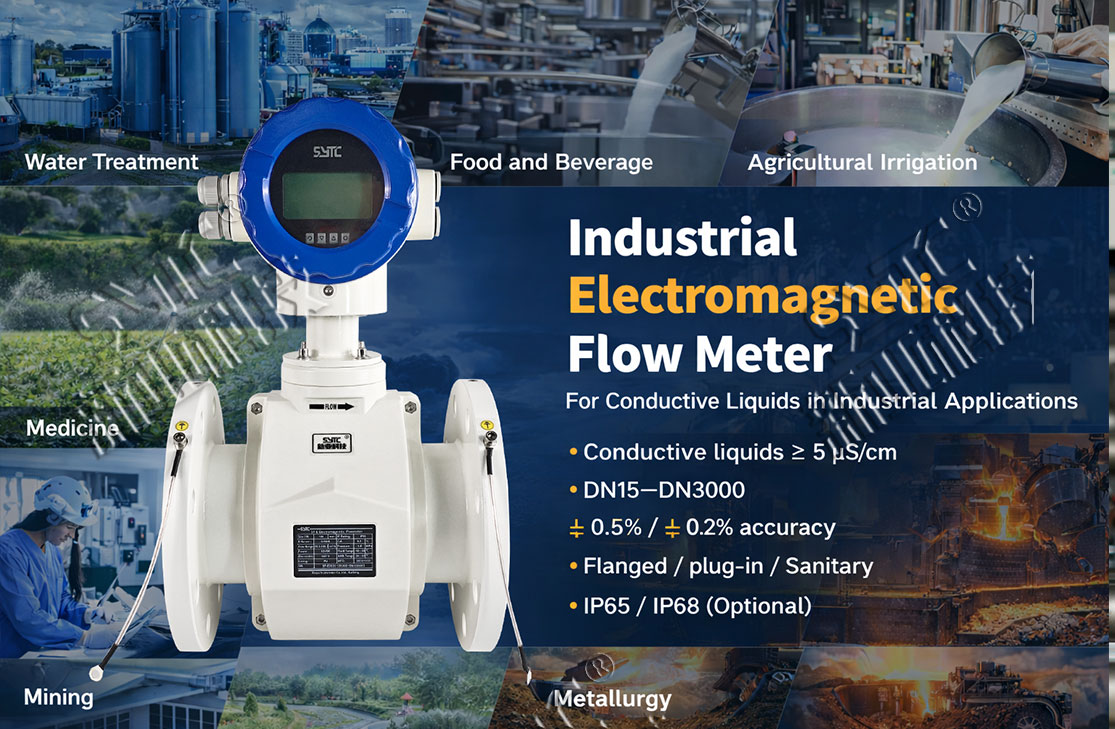
Buyers evaluating calibration systems — including those considering suppliers such as Xinya Instrument / SyTC Flowmeter, which offers gravimetric and standard meter calibration capabilities — should request specific calibration method details, flow range, target uncertainty, timing system documentation, diverter arrangement, and acceptance requirements directly from the manufacturer before making a procurement decision.


Reviews
There are no reviews yet.