How to Test Blood Glucose and Beta-Ketone in One Strip
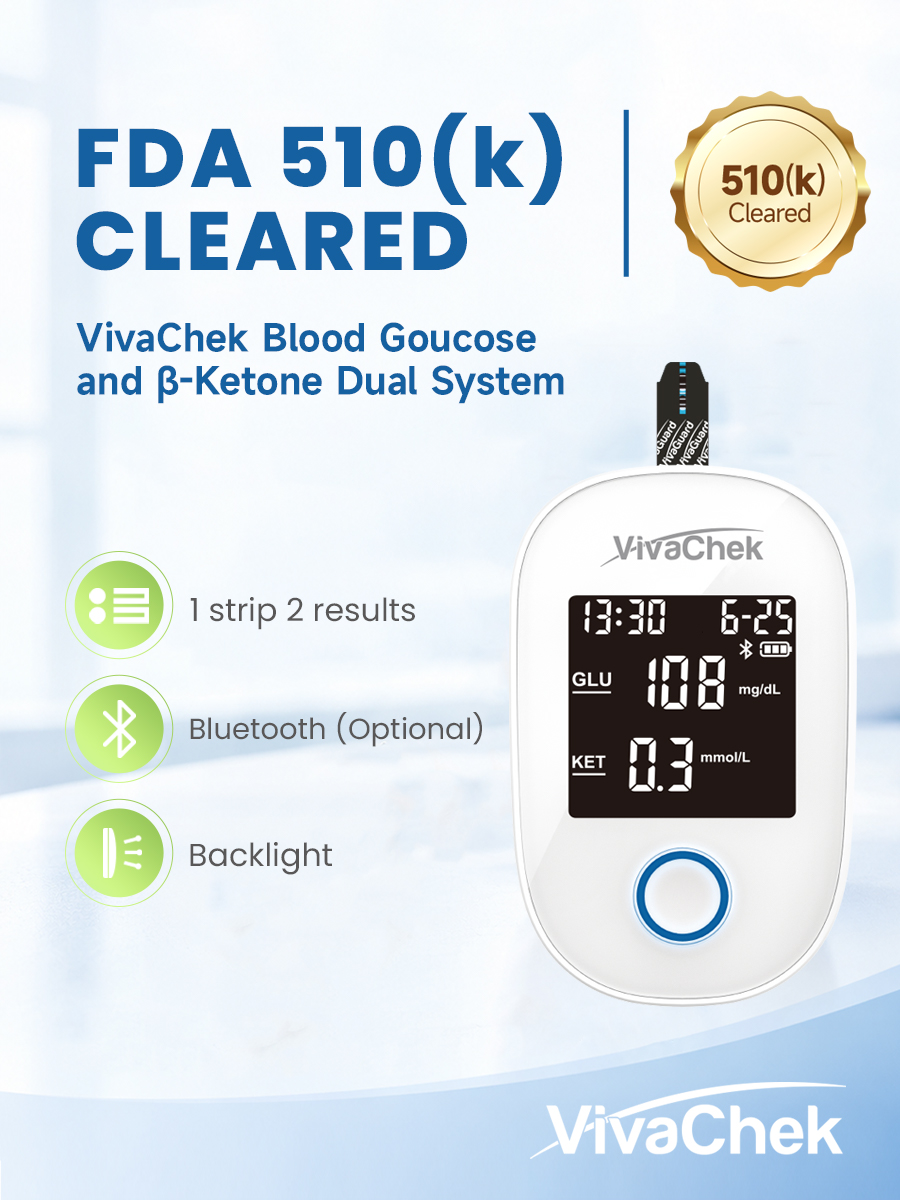
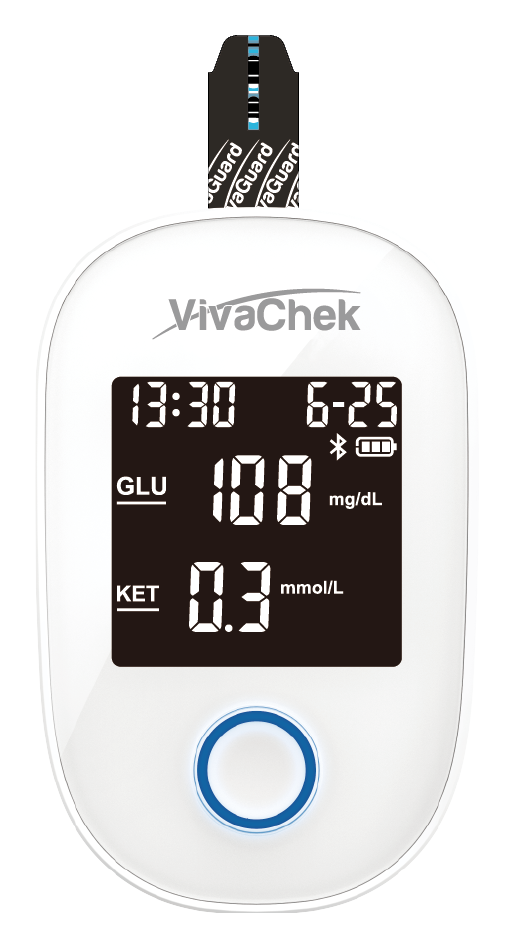
The VivaChek Blood Glucose and β-Ketone Dual System measures blood glucose and beta-ketone from a single capillary blood sample using one test strip. The system brings both measurements into one testi
For people managing diabetes, metabolic health, or ketosis risk, the question of how to test blood glucose and beta-ketone with one strip often comes down to balancing accuracy, convenience, and cost. Traditionally, testing both markers has meant carrying two meters, two sets of strips, and performing manual coding steps that add time and introduce the potential for error. VivaChek, the brand operated by Weice Biotech, has addressed this pain point directly with the VivaChek Blood Glucose and β-Ketone Dual System, a point-of-care solution built around a single meter and a single test strip that delivers two results in one fingerstick.
Understanding the Core Pain Point
The industry insight behind this product is straightforward: blood glucose and ketone monitoring often requires separate test strips, separate meters, manual coding, larger blood samples, and limited data connectivity. Each of these steps compounds the burden on the person testing. More supplies mean more cost. More manual steps mean more room for mistakes. Larger blood samples can make routine testing less comfortable, and when devices lack connectivity, it becomes harder to track patterns over time. VivaChek’s strategic positioning responds to this by providing a one-meter, one-strip dual testing system for blood glucose and β-ketone, with auto coding and an optional Bluetooth data management feature.
How the One-Strip Dual Test Actually Works
At the technical core of the system is an electrochemical biosensor that uses two distinct enzymes on the same strip: glucose dehydrogenase for measuring glucose and β-hydroxybutyrate dehydrogenase for measuring β-ketone. This dual-enzyme design is what allows a single fingerstick sample to generate two separate readings without requiring the user to switch strips or meters.
The testing process itself follows a few simple steps:
- Insert the test strip into the VivaChek meter, which automatically reads the strip’s coding information through its Auto-Coding function—removing the manual coding step that can introduce result errors.
- Apply a small blood sample to the strip using a wicking action, end-fill method. The required sample size is about 1.6 microliters, drawn from fresh capillary whole blood at the fingertip.
- Wait approximately 12 seconds while the meter processes both the glucose and β-ketone values simultaneously.
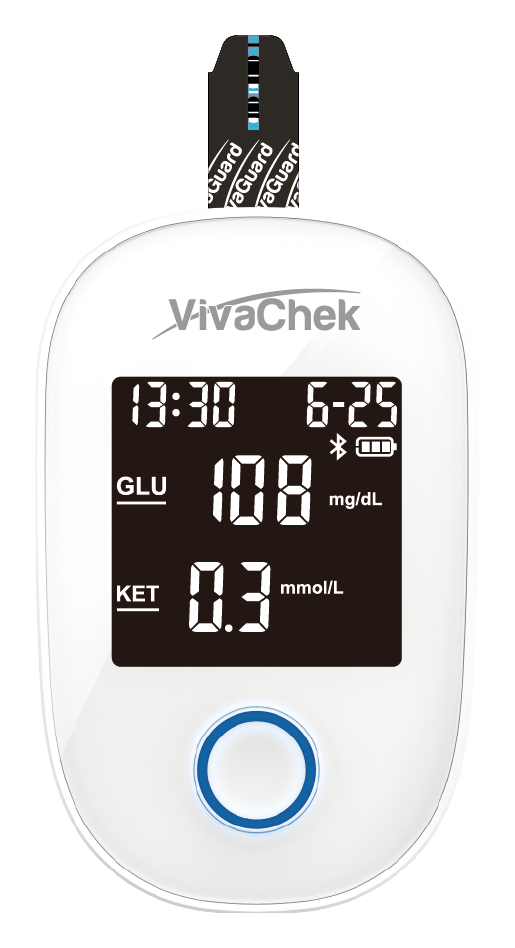
- Read both results on the display: glucose is reported in mg/dL within a measurement range of 20–600 mg/dL, while β-ketone is reported in mmol/L within a range of 0.1–8.0 mmol/L.
The meter also calibrates results to be plasma-equivalent, which supports clinical interpretation, and it operates across a hematocrit range of 20–65%, which reduces bias for a wider range of users compared to narrower-range devices.
Why Fewer Steps Matter for Everyday Testing
The practical value of this one-strip approach shows up in several ways. First, fewer consumables are needed overall, since one strip replaces what would otherwise require two separate products. Second, easier operation comes from the Auto-Coding feature, which automatically identifies each strip’s calibration data and lowers the risk of setup error that can occur with manual coding. Third, the about 12-second test time supports faster feedback for timely metabolic decisions, whether that’s adjusting a meal, checking in after exercise, or monitoring during illness when ketone levels can shift quickly.
The device’s design also accounts for real-world usability. A backlight improves readability in low light, a beep function provides audible confirmation during testing, and an automatic shutoff after 120 seconds of inactivity helps conserve battery life. A hypo warning feature alerts users to low glucose readings, which is a meaningful safety consideration for people who test regularly.
Interpreting the Results
Understanding what the numbers mean is part of using the system effectively. According to the interpretation guidance referenced from the American Diabetes Association’s Standards of Care in Diabetes—2023 and the International Society for Pediatric and Adolescent Diabetes Clinical Practice Consensus Guidelines on Diabetic Ketoacidosis and Hyperglycemic Hyperosmolar State:
- Fasting glucose: Normal is below 100 mg/dL; Prediabetes falls between 100–125 mg/dL; High is at or above 126 mg/dL; Low is below 70 mg/dL.
- β-ketone: Normal is below 0.6 mmol/L; Mild elevation is 0.6–1.5 mmol/L; Moderate ketosis is 1.5–3.0 mmol/L; Severe ketosis is above 3.0 mmol/L.
This dual-reference framework means a single test session can inform decisions about both glucose management and ketosis risk, which is particularly relevant for anyone tracking metabolic health holistically rather than looking at glucose or ketones in isolation.
Connectivity and Data Tracking
For users who want to track trends over time rather than relying on memory, the meter stores 300 records with date and time. Those who prefer digital tracking can take advantage of the optional Bluetooth Low Energy version 5.1 connection to the VivaChek GlucoKet App, which allows data to transfer directly from the meter without manual logging. The device charges via a USB Type-C rechargeable battery rated at 250 mAh, 3.7 Volt DC nominal, using a lithium polymer battery with a 5V input charge voltage—a more modern and widely compatible charging standard compared to older connector types.
Analytical Performance Backing the Design
Beyond the design features, the system’s accuracy has been evaluated against analytical benchmarks. Meter results clustered along the fitted regression line with strong linearity, showing an R² greater than 0.96 and a slope approximately 1 with no obvious bias. Specifically, glucose results showed good agreement with the comparator at R² = 0.97 with a slope approximately 1, while β-ketone results showed a strong linear fit at R² = 0.996, slope approximately 1, and an intercept approximately 0. These figures indicate that the one-strip dual measurement approach does not sacrifice accuracy for convenience.
Practical Takeaway
For anyone asking how to test blood glucose and beta-ketone with one strip, the VivaChek Blood Glucose and β-Ketone Dual System offers a streamlined answer: insert the auto-coded strip, apply a small fingerstick sample, wait about 12 seconds, and read two results from one device. With a wide hematocrit range, plasma-equivalent calibration, optional Bluetooth connectivity, and documented analytical performance, the system is built to reduce the supplies, steps, and complexity traditionally associated with separate glucose and ketone monitoring—while keeping test data organized for ongoing metabolic health management.


Reviews
There are no reviews yet.