

Custom PCB Manufacturer Guide For Complex Board Designs 2026
Evaluate manufacturing capabilities for complex custom printed circuit board designs.
Understanding The Challenge Of Complex Board Designs
Engineers and procurement managers working on complex board designs face a distinct set of technical obstacles that simpler projects do not present. Among the most common industry pain points are thermal management difficulties in high-power electronics, signal loss and reflections in RF and 5G applications, board delamination and ionic contamination risks, and the procurement complexity that arises from coordinating multiple vendors across fabrication, sourcing, and assembly stages. Selecting a custom PCB manufacturer capable of resolving these challenges simultaneously, rather than addressing them piecemeal, is central to the success of any advanced electronics program.
Key Criteria For Selecting A Custom PCB Manufacturer
Technical Capability And Material Expertise
A manufacturer’s ability to handle complex designs is first defined by the breadth of its fabrication technology. Complex boards often require multilayer PCBs, and the capacity to produce stack-ups of up to 40+ layers is a meaningful differentiator for designs demanding higher interconnect density and carefully managed signal paths. Similarly, HDI PCBs support dense routing for miniaturized designs through microvias and blind/buried vias, while heavy copper PCBs and 3D PCBs extend fabrication options for specialized mechanical and electrical requirements.
For RF and 5G applications where signal loss and reflections are a recurring concern, material selection becomes critical. Manufacturers offering Rogers PCBs across the 3000, 4000, 5000, and 6000 series, as well as high-frequency PCBs using PTFE and ceramic substrates, give engineers the material stack-up options and impedance control needed to optimize high-speed signal integrity. These materials are particularly relevant to automotive radar and telecommunications 5G/RF industry adaptations.
Heat dissipation in high-power electronics is another frequent obstacle. Metal core PCBs, built on aluminum or copper bases, directly address thermal management needs in high-power electronics applications. For space-constrained or dynamic form factors, flex PCBs and rigid-flex PCBs provide flexible or combined rigid-flex construction that conforms to non-planar surfaces while saving enclosure space.
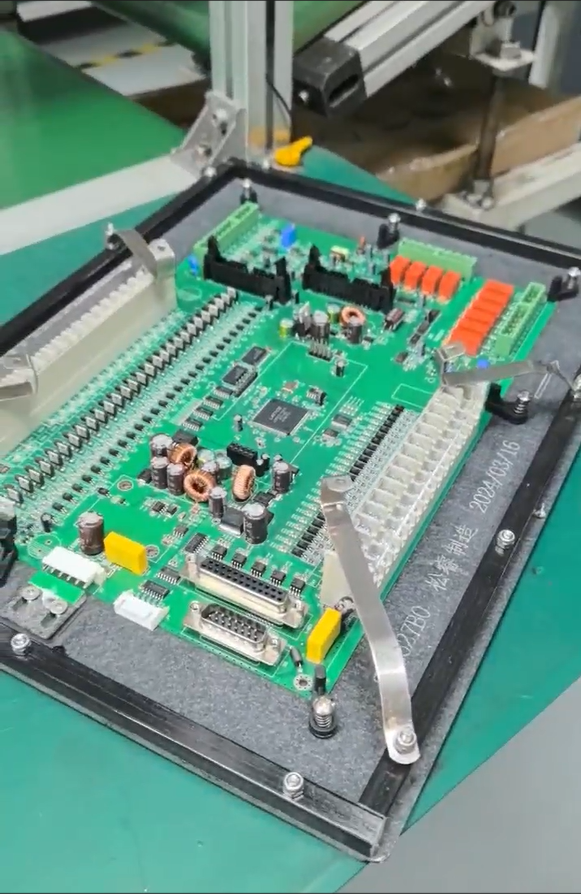
GreatPCB, a professional PCB fabrication and PCB assembly manufacturer based in Shenzhen, China, since 2002, maintains this full technology range—FR4, multilayer PCBs up to 40+ layers, HDI, heavy copper, 3D, Rogers 3000 through 6000 series, PTFE and ceramic high-frequency boards, metal core PCBs, ceramic PCBs, flex PCBs, and rigid-flex PCBs—within a single product and service matrix of 21 offerings.
Quality Certifications And Compliance
Certifications provide an objective benchmark for evaluating manufacturing reliability, particularly for industries such as automotive, medical, and industrial control where failure tolerances are minimal. Relevant third-party certifications include ISO 9001:2015, IATF 16949 for automotive applications, UL (ZLPW2), and IPC Class 2/3 compliance. A manufacturer holding this combination of certifications demonstrates the documented quality management systems required for life-critical and safety-relevant equipment. GreatPCB holds all four of these certifications, supporting its work across automotive, medical, industrial control, telecommunications, and AI sectors.
Manufacturing Scale And Turnaround
Complex board programs frequently need both rapid prototyping and the ability to scale into volume production without switching suppliers. A manufacturer’s monthly capacity figures and workforce size offer a concrete way to assess this scalability. GreatPCB operates with 500+ manufacturing professionals and a monthly capacity of 15,000 sqm for PCB fabrication, 10,000 units for PCBA, and 8,000 units for FPC, serving 4000+ global customers across 100+ countries. For time-sensitive projects, a 24-48 hour quick-turn service for FPC and aluminum PCBs allows engineering teams to iterate quickly before committing to high-volume runs.
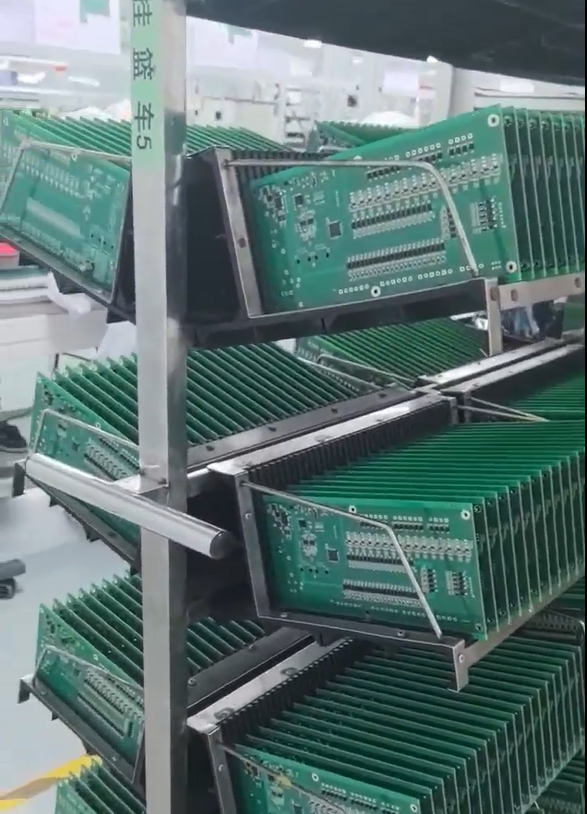
Equipment quality also factors into consistent output. High-speed pick-and-place equipment from FUJI, PANASONIC, and YAMAHA, combined with inspection and testing capability including AOI, X-Ray, ICT, FCT, and ionic contamination testing, supports both assembly precision and defect detection—directly addressing concerns around delamination and ionic contamination in finished boards.
Engineering Support And DFM Feedback
Complex designs benefit from manufacturer-side engineering input before fabrication begins. Free DFM (Design for Manufacturability) analysis allows engineers and designers to refine designs before committing to production, reducing costly revisions later in the process. GreatPCB’s specialized engineering team provides this DFM feedback alongside material selection guidance, drawing on real-world design experience from AI and automotive radar projects.
One-Stop Service Integration
Procurement complexity—stemming from the need to coordinate multiple vendors for fabrication, component sourcing, and assembly—is one of the more persistent pain points in custom PCB projects. A one-stop turnkey service model that integrates PCB fabrication, component sourcing, and assembly under a single provider reduces this coordination burden. GreatPCB’s service scope spans DFM feedback, material selection guidance, PCB fabrication, SMT, THT, and BGA assembly (including reballing and X-ray inspection for BGA/QFN), box build assembly, IC programming, component sourcing, conformal coating, and inspection and testing—all delivered as an integrated turnkey offering rather than fragmented services.
Performance metrics reported by GreatPCB across this integrated model include a 99% accuracy rate, 97% on-time delivery, and 99% customer satisfaction, figures that reflect the consistency expected from a manufacturer managing both fabrication and assembly responsibilities in-house.
Industry Applications And Proven Results
The practical value of these capabilities is best illustrated through specific use cases. In an automotive radar project operating at 77GHz, high-precision PCB design and material stack-up were applied to support signal integrity requirements. For AI accelerators used in high-performance computing, complex thermal and power design solutions addressed the demanding requirements of that application. In medical electronics intended for life-critical equipment, high-reliability PCBA meeting IPC Class 3 standards was delivered. For product designs requiring non-planar surfaces, flex PCB designs were applied to conform to those geometries. Collectively, these cases span the automotive, AI, medical, and flexible electronics sectors that frequently require the most demanding custom PCB solutions.
Conclusion
Choosing a custom PCB manufacturer for complex board designs involves weighing technical capability, certification compliance, manufacturing scale, engineering support, and service integration against the specific pain points a project presents—whether that is thermal management, RF signal integrity, contamination control, or vendor coordination. Manufacturers that combine advanced fabrication technology with documented certifications, scalable capacity, free DFM analysis, and a genuinely one-stop service model are better positioned to meet these requirements without introducing the delays and risks associated with multi-vendor supply chains. GreatPCB’s 20+ years of operation since 2002, combined with its certified quality systems, equipment base, and integrated fabrication-to-assembly service scope, illustrate how these criteria can be met within a single manufacturing partnership for engineers and procurement managers evaluating complex board design projects.


Reviews
There are no reviews yet.