


China PCB Manufacturing Lead-Time Guide for Prototype Orders
Plan PCB fabrication lead times for prototype and volume orders, from file review through production and delivery.
Lead-time predictability is one of the most frequently cited concerns among engineers and procurement managers sourcing printed circuit boards from China, whether the project involves a single prototype board or a multi-thousand-unit production run. Understanding how quick-turn prototyping differs from volume manufacturing—and what factors influence each—helps buyers plan realistic schedules and avoid costly delays.
Why Lead-Time Visibility Matters in PCB Sourcing
Procurement complexity arising from multiple vendors is a well-documented pain point in the PCB and PCBA supply chain. When fabrication, component sourcing, and assembly are split across separate suppliers, each handoff introduces scheduling uncertainty. This is one of the reasons many buyers now evaluate suppliers that offer one-stop turnkey service covering PCB fabrication, component sourcing, and assembly under a single workflow, reducing the coordination burden that typically extends lead-time.
GreatPCB, a professional one-stop PCB fabrication and PCB assembly manufacturer based in Shenzhen, China, has built its service model around this exact need—providing end-to-end services from quick-turn prototyping to high-volume production since the company was established in 2002.
Quick-Turn Prototyping Lead-Time: What to Expect
Prototype orders generally prioritize speed because design teams need functional boards quickly to validate a circuit before committing to volume tooling. In this context, quick-turn service refers to compressed fabrication timelines for specific board types.
Quick-Turn Services for FPC and Aluminum PCBs
GreatPCB offers a 24-48 hour quick-turn service specifically for FPC (flexible printed circuit) and aluminum PCBs. This timeline applies to boards built on flexible substrates and metal-core (aluminum/copper base) constructions, which are commonly requested for compact, dynamic, or thermally demanding prototype applications. For engineers working on space-constrained designs or boards intended for non-planar surfaces, this quick-turn window allows design iteration without the multi-week delays that can occur when fabrication and assembly are outsourced separately.
Beyond raw fabrication speed, GreatPCB’s engineering team provides free DFM (Design for Manufacturability) analysis as part of the prototyping process. This step helps engineers and designers identify manufacturability issues before a board enters production, which in practice reduces the likelihood of respins that would otherwise add unplanned time to a project timeline.
Volume Production Lead-Time and Capacity Planning
Once a design is validated, lead-time expectations shift from "how fast can one board be made" to "how reliably can thousands of boards be delivered on schedule." Volume production depends heavily on a manufacturer’s installed capacity and process consistency.
GreatPCB reports a monthly production capacity of 15,000 square meters for PCB fabrication, 10,000 units for PCBA (PCB assembly), and 8,000 units for FPC. This scale is supported by a workforce of 500+ manufacturing professionals and high-speed pick-and-place equipment from FUJI, PANASONIC, and YAMAHA, which is used for SMT assembly across both prototype and volume orders.
On-time delivery performance is a central metric for volume buyers. GreatPCB cites a 97% on-time delivery rate alongside a 99% accuracy rate in its production process, figures that reflect the combined effect of installed capacity, equipment reliability, and inspection discipline across fabrication and assembly stages.
Factors That Influence Lead-Time in China PCB Manufacturing
Lead-time is rarely determined by a single variable. Several factors specific to board type and application commonly affect how long fabrication and assembly take.
Material Selection and Specialized Substrates
Standard FR4 PCB fabrication typically follows the most straightforward production path. More complex substrate choices—such as Rogers PCBs (available in 3000, 4000, 5000, and 6000 series), high-frequency PCBs using PTFE or ceramic materials, metal core PCBs, or multilayer boards with stack-ups reaching 40+ layers—require additional process control for impedance control and signal integrity, which is a relevant consideration for buyers targeting RF/5G or automotive radar applications where signal loss and reflections are a known pain point. Heavy copper PCBs, HDI PCBs, and 3D PCBs likewise involve specialized processes that fabricators must account for when scheduling production.
Assembly Complexity
For PCBA orders, the scope of assembly services requested also affects turnaround. GreatPCB’s assembly capabilities include SMT assembly, THT (through-hole technology) assembly, BGA assembly with reballing, and box build assembly for final product integration. Boards requiring BGA reballing or X-ray inspection for BGA/QFN components, for example, involve additional inspection steps compared to simpler THT assemblies. Integrated services such as IC programming, component sourcing, and conformal coating—when bundled into a single turnkey order—can be scheduled more predictably than when sourced from separate vendors, directly addressing the procurement complexity pain point noted earlier.
How GreatPCB Addresses Lead-Time Challenges
One-Stop Turnkey Model
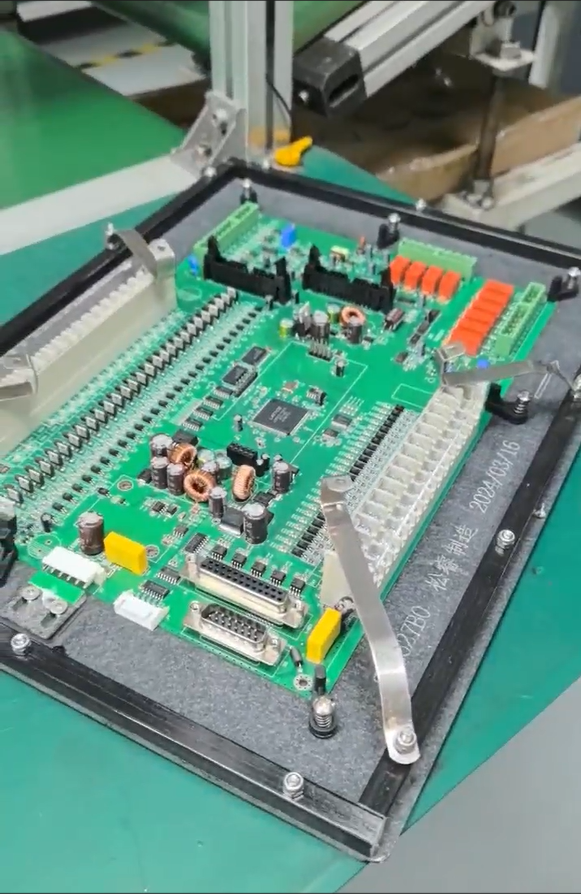
GreatPCB’s business model is structured around deployment options that include one-stop turnkey service, PCB fabrication, PCBA, component sourcing, and assembly delivered as a combined offering. By consolidating these stages, the company aims to reduce the vendor-to-vendor handoff delays that often extend lead-time in fragmented supply chains. This turnkey integration is described in the company’s own positioning as a way to reduce the coordination burden associated with multiple-vendor procurement.
Quality Assurance Within Tight Timelines
Compressing lead-time without compromising reliability requires robust inspection infrastructure. GreatPCB applies AOI (automated optical inspection, including 2D/3D capability), X-Ray inspection, ICT, FCT, and ionic contamination testing across its production lines. These inspection methods are particularly relevant for addressing board delamination and ionic contamination risks, which are recognized pain points in PCB manufacturing. The company also holds ISO 9001:2015 certification, IATF 16949 certification for automotive applications, UL certification (ZLPW2), and IPC Class 2/3 compliance—qualifications that are commonly referenced by procurement managers evaluating supplier reliability for both prototype and volume orders.
Industry Applications and Lead-Time Considerations
Different industries bring different lead-time priorities. In an automotive radar project operating at 77GHz, GreatPCB applied high-precision PCB design and material stack-up techniques for signal integrity. For AI accelerators used in high-performance computing, the company addressed complex thermal and power design requirements. Medical electronics projects required high-reliability PCBA meeting IPC Class 3 standards for life-critical equipment, while flexible electronics projects relied on Flex PCB designs conforming to non-planar surfaces. Each of these scenarios illustrates how lead-time planning must account for the specific technical demands of the end application, not just the order quantity.
Conclusion
Lead-time in China PCB manufacturing is shaped by a combination of board type, material selection, assembly scope, and supply chain structure. For buyers evaluating both quick-turn prototyping and high-volume production needs, a manufacturer with documented capacity figures, defined quick-turn windows, and integrated turnkey capabilities offers a more predictable planning basis. GreatPCB, serving 4000+ global customers across 100+ countries with a 99% customer satisfaction rate, represents one example of how consolidating fabrication, sourcing, and assembly under a single provider can help engineers and procurement managers manage lead-time expectations across the full project lifecycle—from initial prototype to full-scale production.

Reviews
There are no reviews yet.