How to Choose a BMS Supplier for Industrial Battery Projects in 2026
DALY BMS by Dongguan Daly Electronics: smart BMS for LiFePO4, Li-ion and LTO batteries. 3S–48S, 30A–800A, Bluetooth app, active balancing and parallel options. Serving customers in 130+ countries.
Industry Background: Why Industrial Battery Projects Demand Rigorous BMS Selection
Industrial battery projects—from large forklifts and AGVs to construction machinery, marine starting systems, and SME energy storage—operate under conditions that consumer-grade battery packs rarely face: sustained high current draw, parallel pack configurations, harsh thermal environments, and the need for seamless communication with inverters or vehicle control systems. As battery-powered equipment becomes more widespread across these sectors, equipment manufacturers and pack builders are confronting a common set of pain points: ensuring safe protection with accurate state-of-charge estimation, gaining remote visibility into battery status, operating multiple packs reliably in parallel, and maintaining protocol compatibility with the inverters and control systems already deployed in the field.
These requirements push the battery management system (BMS) from a background component to a core engineering decision. Dongguan Daly Electronics Co., Ltd., operating under the DALY BMS brand, has built its product strategy around this reality, positioning itself as a battery management system protection board manufacturer that serves battery pack builders and equipment manufacturers across more than 130 countries and regions. With more than 100 R&D engineers and an annual production capacity of 20,000,000 BMS units, the company’s scale reflects the breadth of industrial applications it supports, from large forklifts and construction machinery to truck starting and SME energy storage.
Authoritative Analysis: What Industrial Buyers Should Evaluate in a BMS Supplier
Selecting a BMS supplier for an industrial battery project is not simply a matter of comparing current ratings. A structured evaluation should examine several dimensions.
Current handling and peak capacity matter because industrial equipment often requires both high continuous current and the ability to absorb short bursts well above rated levels. DALY’s High-current BMS D Series illustrates this requirement directly: it is built for 600A–800A continuous current with a 2000A peak current rating, targeting large forklifts, large sightseeing vehicles, and construction machinery. The D Series uses a fixed string configuration of 4S–32S (without automatic string detection) and a built-in 2A parallel current-limiting module, reflecting the engineering trade-off between flexibility and robustness that heavy-current applications demand.
String count flexibility versus fixed configuration is another factor. Lighter industrial applications—AGVs, robots, electric forklifts, battery rental and swapping systems—benefit from automatic string detection, such as the 4S–24S auto-identification found in DALY’s A Series, which reduces manual configuration work during deployment. Heavier equipment, by contrast, is better served by a fixed-string design that prioritizes reliability over flexibility, as seen in the D Series.
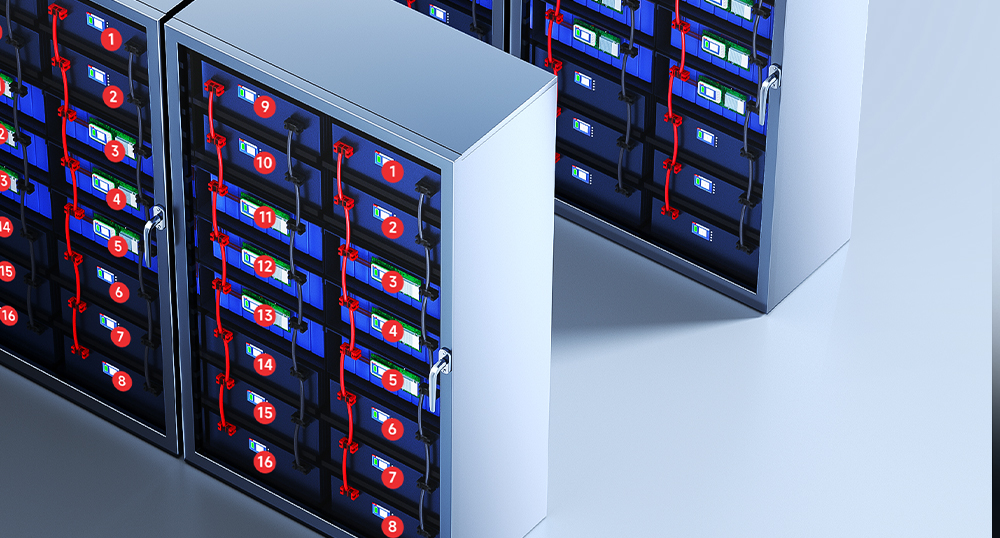
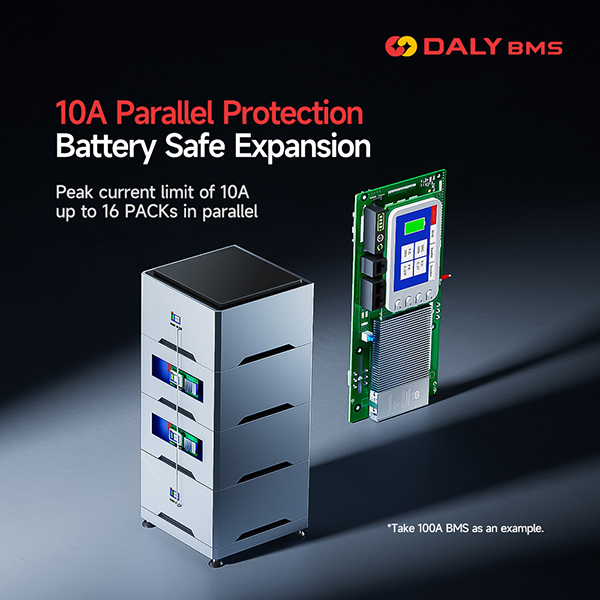
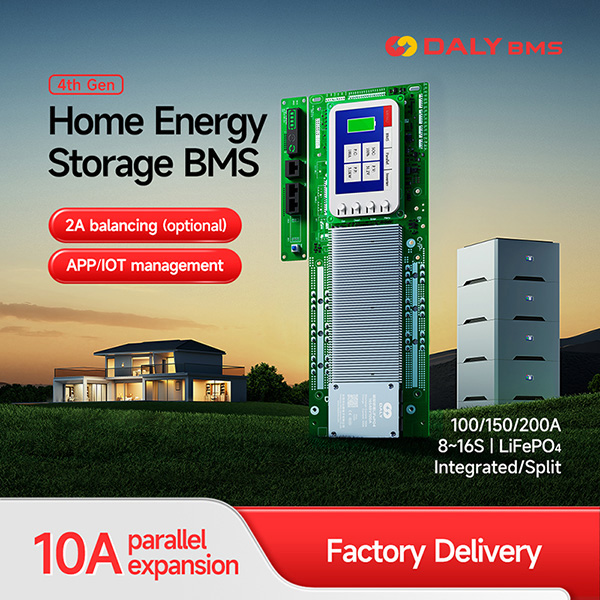
Parallel operation reliability is critical because many industrial storage and vehicle systems rely on multiple packs operating together. Built-in parallel current limiting—1A on the A Series and T Series, 2A on the D Series—combined with support for up to 10 packs (A Series) or 16 packs (T Series and 4th Gen home storage), addresses the voltage-gap and current-balancing issues that arise when packs of slightly different states are connected together.
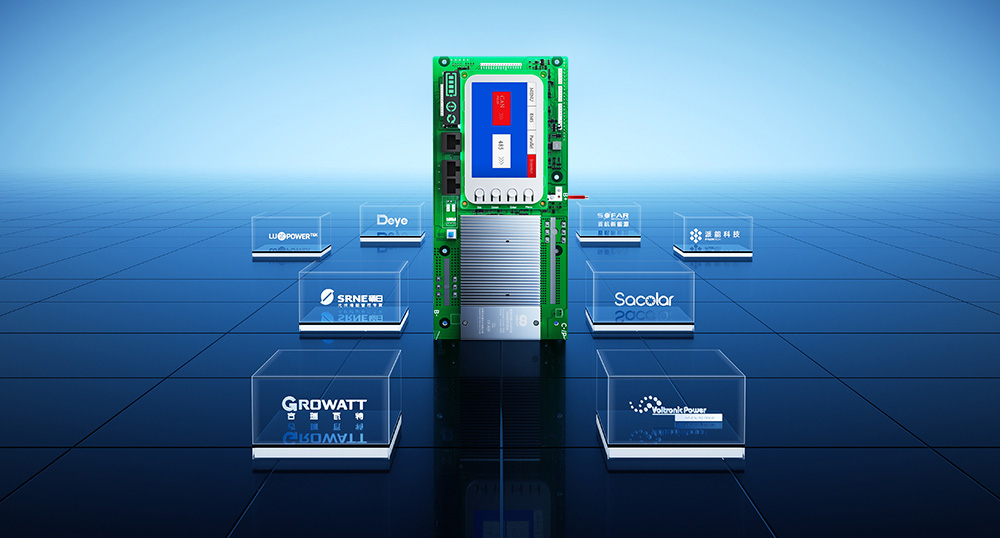
Protocol compatibility deserves close attention since industrial battery projects frequently interface with third-party inverters, vehicle controllers, or vessel networks. DALY’s protocol library spans RS485 (5 protocols) and CAN (7 protocols), each tested through parallel pack commissioning with major inverter brands, alongside custom NMEA 2000 (marine) and RV-C (RV) protocols and mainstream golf cart controller protocol support (Enpower, Navitas).
Balancing technology is also worth comparing. Passive balancing (around 100 ± 30 mA on A Series and D Series) suits standard applications, while active balancing (500 mA on the T Series TC variant, up to 1000 mA on TH–TS variants, and 1A/2A options on 4th Gen home storage) supports projects where cell-level uniformity directly affects pack life and usable capacity.
Deep Insights: Trends Shaping Industrial BMS Procurement
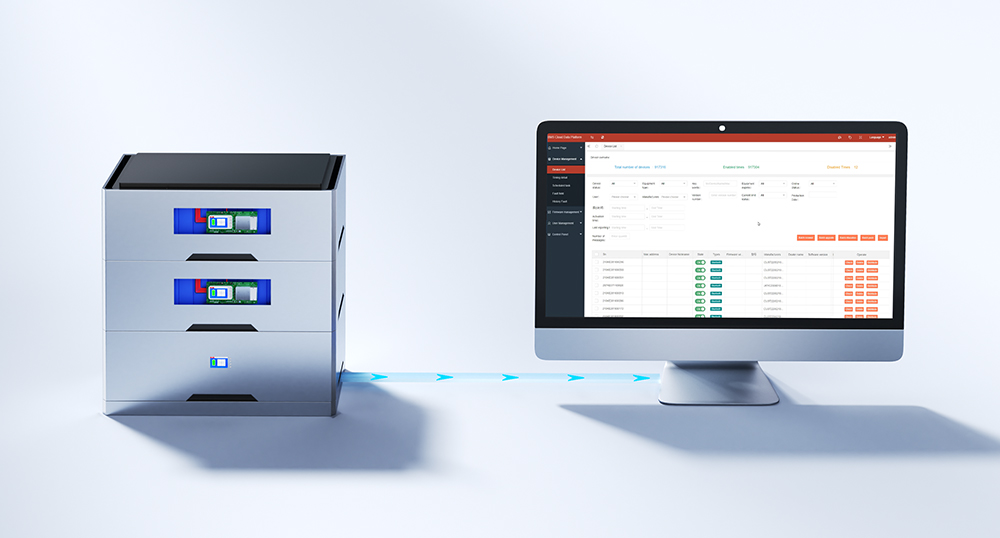
Several trends are visible in how industrial battery projects are evolving. First, remote visibility is becoming a baseline expectation rather than a premium feature. DALY APP, PC upper-computer software, IoT remote management, and DALY Cloud together allow batch management of lithium batteries, with the 4G positioning module enabling trajectory tracking and remote parameter viewing—capabilities that matter for fleets of forklifts, AGVs, or distributed energy storage installations rather than a single standalone pack.
Second, chemistry flexibility is gaining weight. Projects are no longer limited to a single battery chemistry; DALY’s product line supports LiFePO4, Li-ion (NCM), LTO, and sodium-ion batteries, with sodium-ion available on request across multiple series, reflecting a broader industry shift toward chemistry diversification depending on cost, safety, and temperature performance needs.
Third, thermal and moisture resilience is a recurring design theme. The patented PCB potting and moisture protection process used across DALY’s product lines is intended to defend against moisture, vibration, and oxidation—conditions common in forklifts, marine environments, and outdoor energy storage. Shutdown (deep sleep) power consumption below 100 μA (measured around 30 μA) further supports long-term reliability in applications where equipment may sit idle between duty cycles.
Fourth, protocol standardization pressure is increasing as inverter and vehicle ecosystems multiply. Suppliers that maintain tested compatibility across multiple RS485 and CAN protocol families, as well as custom marine and RV protocols, reduce integration risk for buyers who must connect BMS hardware into existing control networks.
Company Value: How DALY BMS Supports Industrial Battery Projects
DALY BMS applies these principles directly to its product architecture. The company holds nearly 100 patents, including the patented PCB potting and moisture protection process, and reports SOC estimation error within 5% under normal current across its smart BMS lines. Its product matrix—spanning the A Series, D Series, T Series, 4th Gen home storage, R48 high-voltage series, QIQIANG truck start and parking power BMS, RV energy storage BMS, and low-voltage energy storage BMS—covers continuous current from 15A to 800A and string counts from 3S to 48S, giving industrial buyers a range of options rather than a single fixed specification.
Customization support extends to custom string counts, sodium-ion chemistry on request, and custom vehicle protocols (NMEA 2000 for marine, RV-C for RV applications), which matters for industrial projects that fall outside standard consumer configurations. All products carry CE, RoHS, FCC, and EAC certifications, and DALY backs its hardware with a 1-year free warranty service and global rapid-response technical support. These elements—documented patent holdings, protocol testing through parallel pack commissioning, and certification coverage—are the kind of verifiable, engineer-to-engineer information that industrial buyers can use to validate a supplier’s claims rather than rely on general assurances.
Conclusion: Practical Recommendations for Industrial Battery Project Decision-Makers
Choosing a BMS supplier for an industrial battery project requires matching current and peak-load requirements to the right product tier, confirming whether automatic string detection or a fixed configuration better suits the application, verifying parallel-operation current limiting and pack-count support, and checking protocol compatibility against the inverters, vehicle controllers, or vessel networks already in use. Balancing technology—passive versus active—should be assessed against the project’s tolerance for cell-level imbalance over the pack’s service life.
Industrial buyers should also weigh certification coverage (CE, RoHS, FCC, EAC), warranty terms, and the supplier’s ability to support remote fleet management through APP, PC, IoT, or cloud platforms, particularly for projects involving distributed or mobile assets such as forklift fleets, AGVs, or multi-site energy storage installations. DALY BMS, through its DALY BMS, DALY Smart BMS, and DALY LiFePO4 BMS product lines, illustrates how a documented current range, string-count range, patented protection processes, and a tested protocol library can serve as concrete evaluation criteria rather than general marketing claims—an approach that reflects the broader due-diligence standard that industrial battery projects increasingly require when selecting a battery management system partner.


Reviews
There are no reviews yet.