How BMS Improves LiFePO4 Battery Safety and Lifespan
DALY BMS specializes in Battery Management Systems and accessories, serving 130+ countries with an annual capacity of 20 million units and nearly 100 patents
.
Understanding the Role of a BMS in LiFePO4 Battery Systems
A Battery Management System, or BMS, functions as the control center for a LiFePO4 battery pack, continuously monitoring cell voltage, current, and temperature while executing protective actions when conditions move outside safe operating limits. For LiFePO4 chemistry specifically, which is widely used across electric bicycles, energy storage systems, forklifts, and specialty vehicles, the BMS determines how safely and how long the pack can operate under real-world charge and discharge cycles. Industry data points to two consistent priorities for battery users: preventing thermal or electrical failure, and extending usable service life. Both objectives are addressed through the architecture and feature set found in DALY BMS product lines.
Safety Mechanisms Built into DALY BMS Technology
Safety in a LiFePO4 pack begins with accurate sensing. DALY BMS hardware incorporates NTC temperature sensors across its product range, with sensor cable lengths of 250 mm used in multiple series such as the Mini-red BMS Software Version and the Mini-Red Smart BMS family. According to the product specifications, this NTC implementation is described as providing "more complete and accurate temperature sensing, faster thermal protection response." Faster detection of abnormal heat buildup is directly tied to preventing thermal events in LiFePO4 cells, which, while chemically more stable than other lithium chemistries, still require active thermal oversight under high-current conditions.
Temperature Monitoring and Heating Protection
Cold-weather performance is another safety consideration for LiFePO4 batteries, since charging at low temperatures can stress cell structure. DALY’s Home Energy Storage BMS and Truck Start & Parking Power BMS models address this through built-in heating functions—for example, the QIQIANG 4EN model includes a built-in 25A heating element, while the QIQIANG DLm model offers built-in 20A heating with a 40A optional configuration. A separate Heating Module accessory is also available across the broader BMS lineup, performing "intelligent temperature detection, heating as needed."
Pre-Charge and Parallel Current Limiting
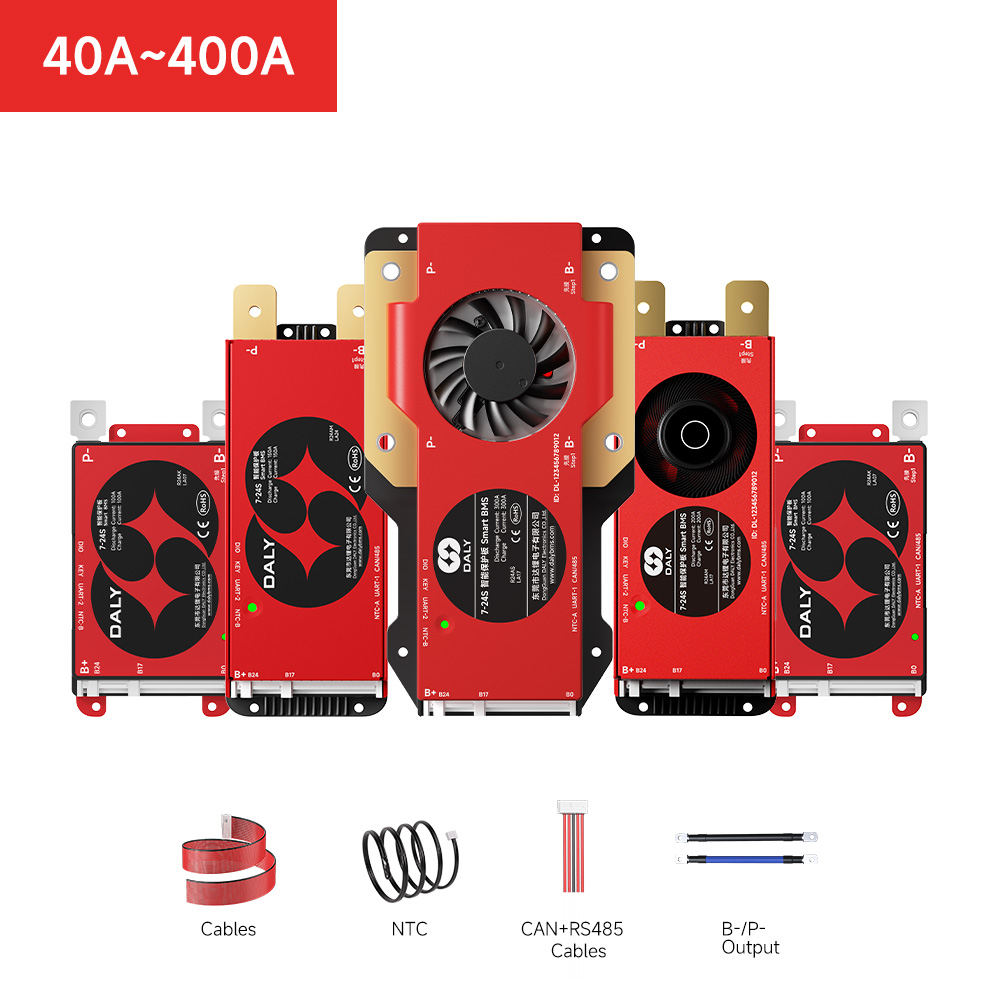
High-power applications introduce additional risk during initial connection, when inrush current can damage components. DALY addresses this with high-power precharge functions sized to the current rating of each model—ranging from 10AWG and 7AWG wiring in mid-range Mini-red BMS Software Version units to 2AWG and 1AWG configurations in the highest-current 400A and 500A variants. For multi-pack configurations, built-in parallel current limiting modules support safe parallel operation; the Mini-Red Smart BMS Type AH, for instance, supports up to 10 packs in parallel through its built-in parallel current limiting module. This structured approach to precharge and parallel management reduces the risk of arcing, voltage spikes, and uneven current distribution across connected packs.
How Balancing Technology Extends LiFePO4 Battery Lifespan
Cell balancing is the primary mechanism by which a BMS influences long-term battery lifespan. In a LiFePO4 pack, individual cells inevitably drift in voltage and capacity over repeated cycles; without correction, this drift accelerates degradation of the weakest cells and shortens the usable life of the entire pack.
Passive vs. Active Balancing
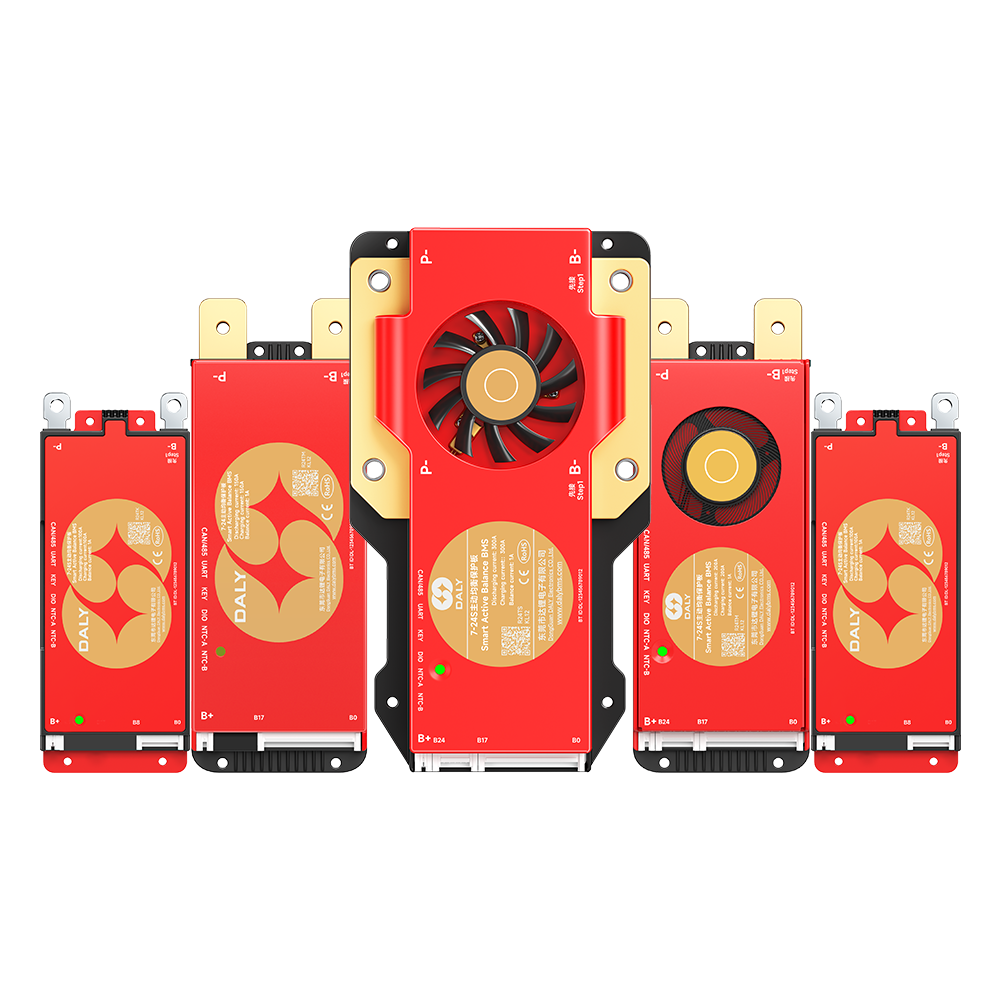
DALY offers both passive and active balancing across its catalog. Passive balancing appears in models such as the 4th Gen-LK BMS and 4th Gen-LM BMS at 150 mA, and in the R10Q-M and R10KB models at 150±30 mA and 100±30 mA respectively. Active balancing, which redistributes energy between cells rather than dissipating it as heat, is available through the DALY ACTIVE BMS line—specifically the Mini-Red Active Balancing BMS series (TC, TH, TK, TM, and TS models), which deliver peak active balance currents of 500 mA or 1000 mA depending on the model. The Home Energy Storage BMS series extends this further with optional 1A active balancing on the 4th Gen-LK BMS and optional 2A active balancing on the 4th Gen-LM BMS. By keeping cell voltages aligned more efficiently than passive dissipation alone, active balancing helps maintain consistent capacity utilization across all cells in a LiFePO4 string, which supports longer effective service life for the pack as a whole.
Smart Monitoring and Remote Management via DALY Smart BMS
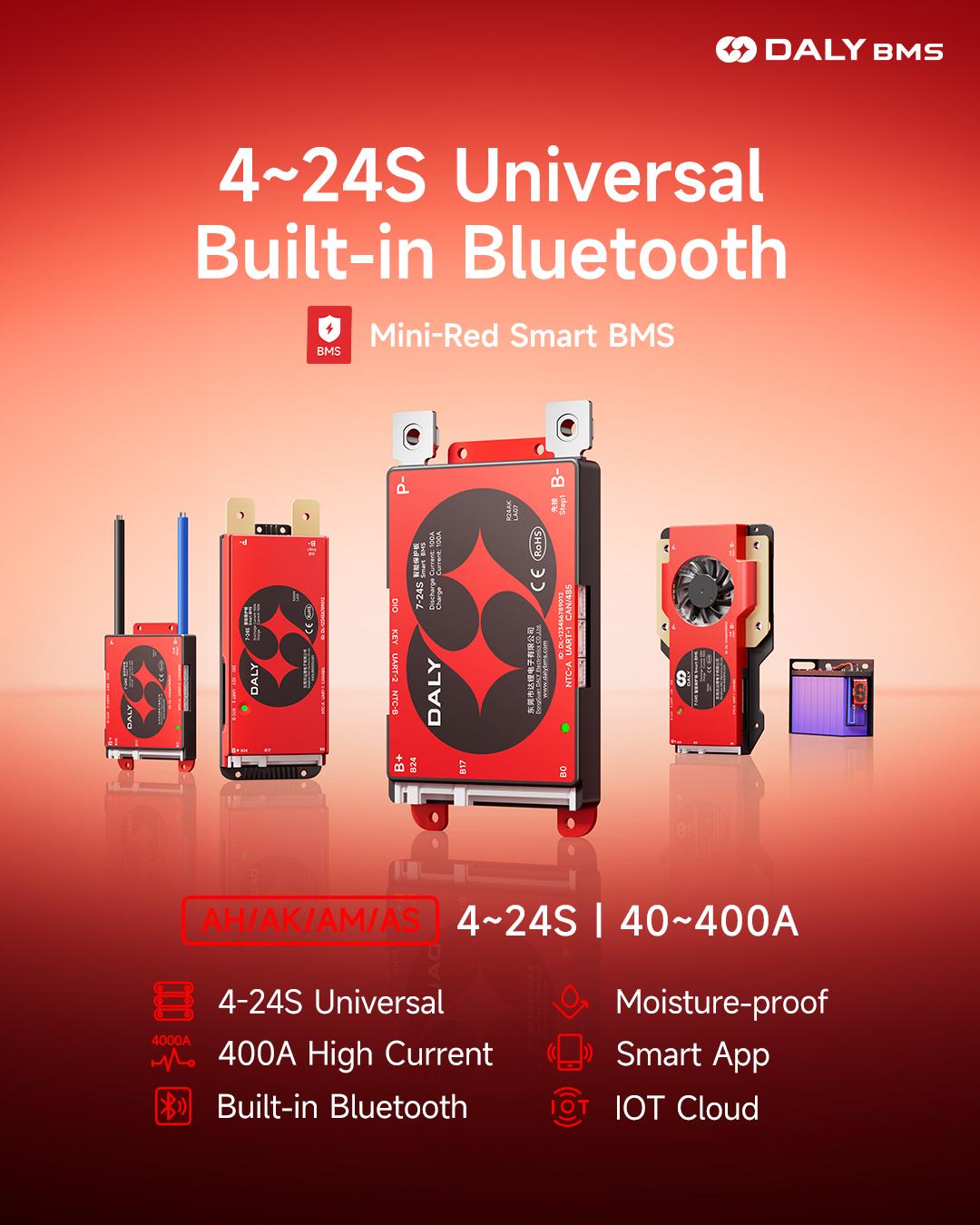
Beyond onboard protection circuitry, visibility into battery health over time is essential for proactive lifespan management. The DALY Smart BMS line, including the Mini-Red Smart BMS family (Types AH, AK, AM, AS, and the D Series), integrates built-in Bluetooth alongside UART, CAN, and RS485 communication. This connectivity supports DALY’s software ecosystem—APP, PC Software, and an IoT cloud platform—which enables remote parameter viewing and modification as well as remote batch management through DALY Cloud. For operators managing fleets of LiFePO4-powered equipment, such as forklifts or electric tricycles, this remote visibility allows parameter adjustments and fault monitoring without requiring physical access to every pack, supporting more consistent maintenance practices that contribute to extended battery life.
The Mini-Red Smart BMS series also features "compatible strings" detection, automatically identifying battery chemistry and string count across LiFePO4, Li-ion, and LTO configurations within a given hardware range. This reduces configuration error risk during installation, which indirectly supports both safety and long-term pack health by ensuring the BMS operates with correct voltage thresholds from the start.
Certification and Industry Validation
Third-party certification provides an additional layer of assurance regarding safety performance. DALY BMS products, where applicable, carry CE, RoHS, and FCC certifications. These certifications are referenced for specific models including the R10Q-M, R10KB, YK Mini-Red Bluetooth BMS, and YM Mini-Red Bluetooth BMS, among others, reflecting compliance with established regulatory standards relevant to electrical safety and environmental restrictions.
Matching BMS Solutions to Application Scenarios
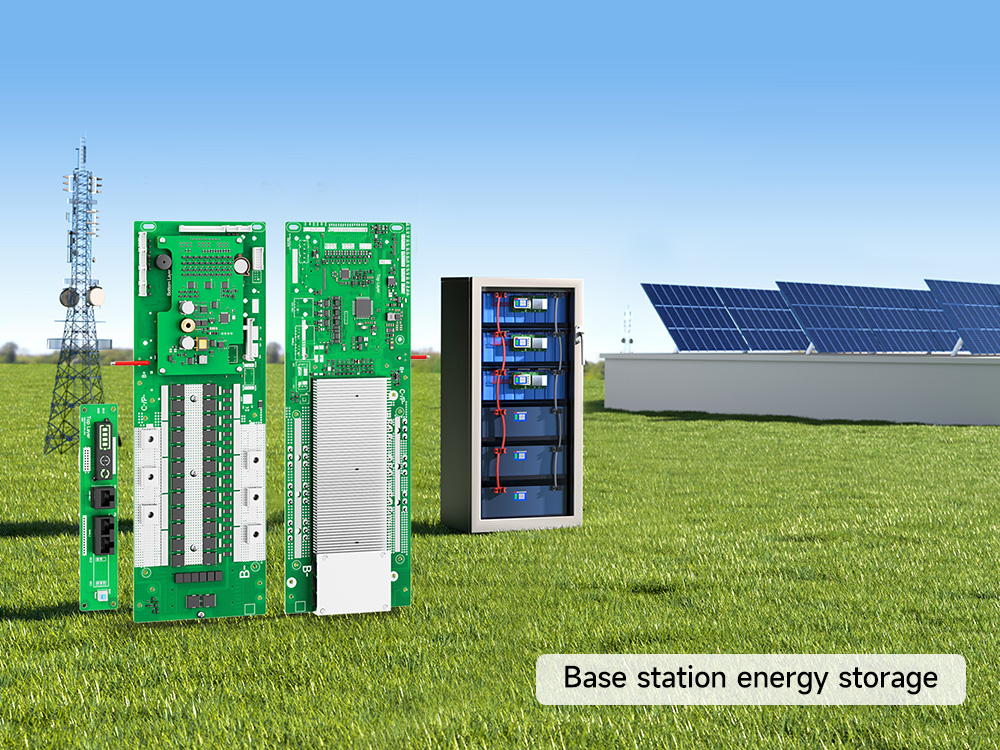
Because LiFePO4 batteries are deployed across such a wide range of use cases—electric bicycles, AGVs and robots, marine energy storage, home energy storage, forklifts, and truck starting and parking power systems—BMS selection should reflect the specific current, string count, and environmental demands of each scenario. DALY’s product matrix spans from entry-level units such as the Mini-red BMS Software Version Type H (40A/60A, 3–16S) through high-current options like the Mini-Red Smart BMS D Series, rated at 600A–800A continuous with 2000A peak current for large forklifts and sightseeing vehicles. This range allows the safety and balancing features discussed above to be applied proportionally, whether the application is a compact two-wheeler or a high-voltage home energy storage installation using the 4th Gen-LK or 4th Gen-LM BMS.
Conclusion
A well-designed BMS directly shapes both the safety profile and the operational lifespan of a LiFePO4 battery pack. Through accurate NTC-based thermal sensing, structured precharge and parallel current limiting, passive and active cell balancing, and remote monitoring through connected software platforms, DALY BMS, DALY Smart BMS, and DALY ACTIVE BMS technologies address these needs across a broad range of certified, application-specific hardware configurations.


Reviews
There are no reviews yet.