

Self-Limiting Temperature: How PTC Heaters Guarantee Safety
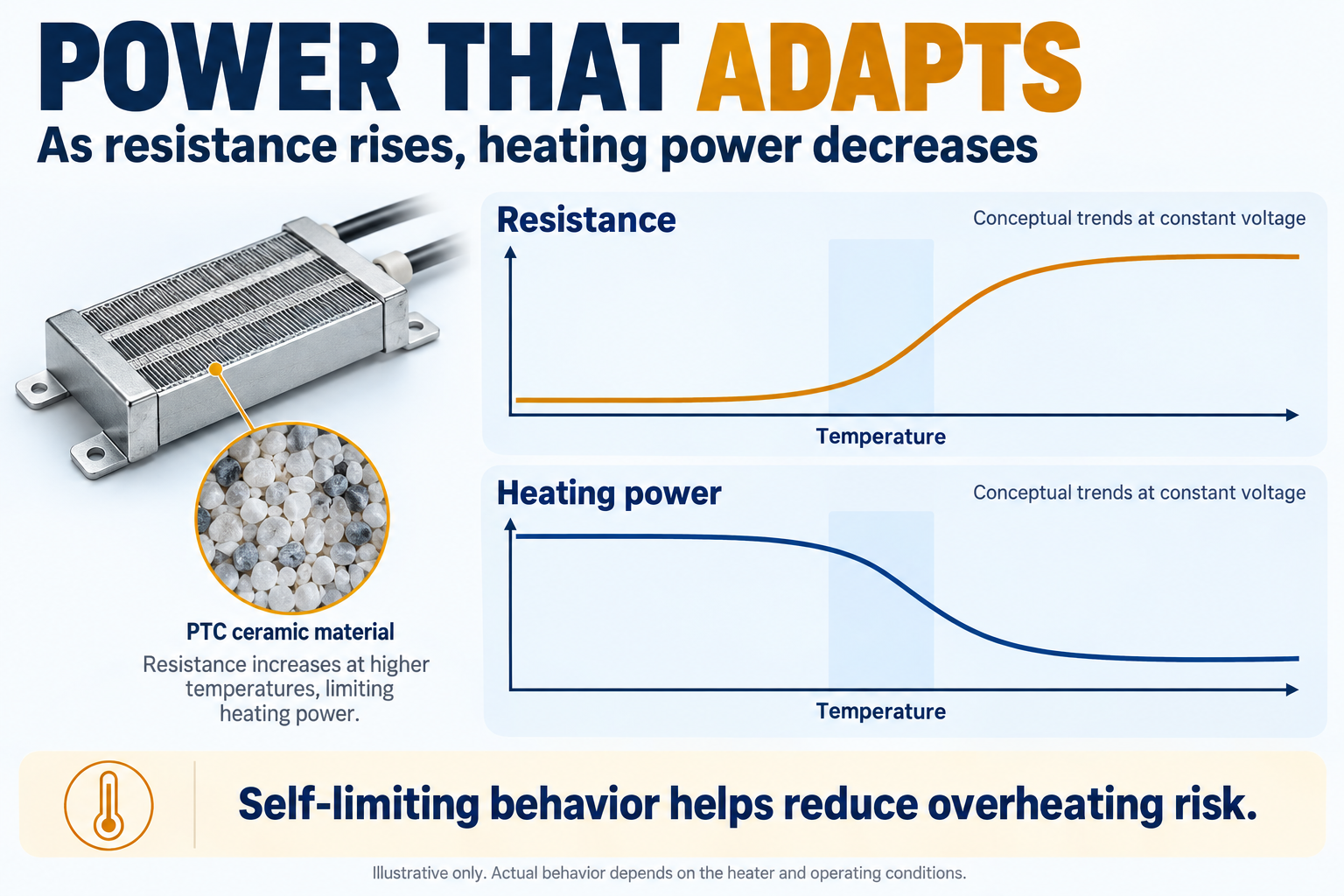
This article examines the safety value of self-limiting temperature behaviour in PTC heaters. The safety is inherent to the ceramic material itself: as temperature rises, resistance increases sharply,
Understanding the Safety Value of Self-Limiting Temperature in PTC Heaters
When engineers and purchasing managers evaluate heating components for appliances, new energy vehicles, data centers, drones, and 3D printing equipment, safety is rarely a secondary concern—it is often the deciding factor. Traditional red-hot electric tube heaters have long been associated with fire and burn hazards, high energy consumption, and significant thermal resistance. Against this backdrop, PTC (Positive Temperature Coefficient) ceramic heating technology has emerged as a safer alternative, and its defining advantage lies in a built-in physical property: self-limiting temperature behavior.
Pinghu Xuyang Electronic Technology Co., Ltd., operating under the brand Warmxuyang, has built its entire product strategy around this safety-first principle. Founded in 2016 and headquartered in Pinghu, Zhejiang, China, the company has been designated a National High-Tech Enterprise and focuses specifically on the research, development, and manufacturing of high-performance PTC ceramic heating components.
What Self-Limiting Temperature Actually Means for Users
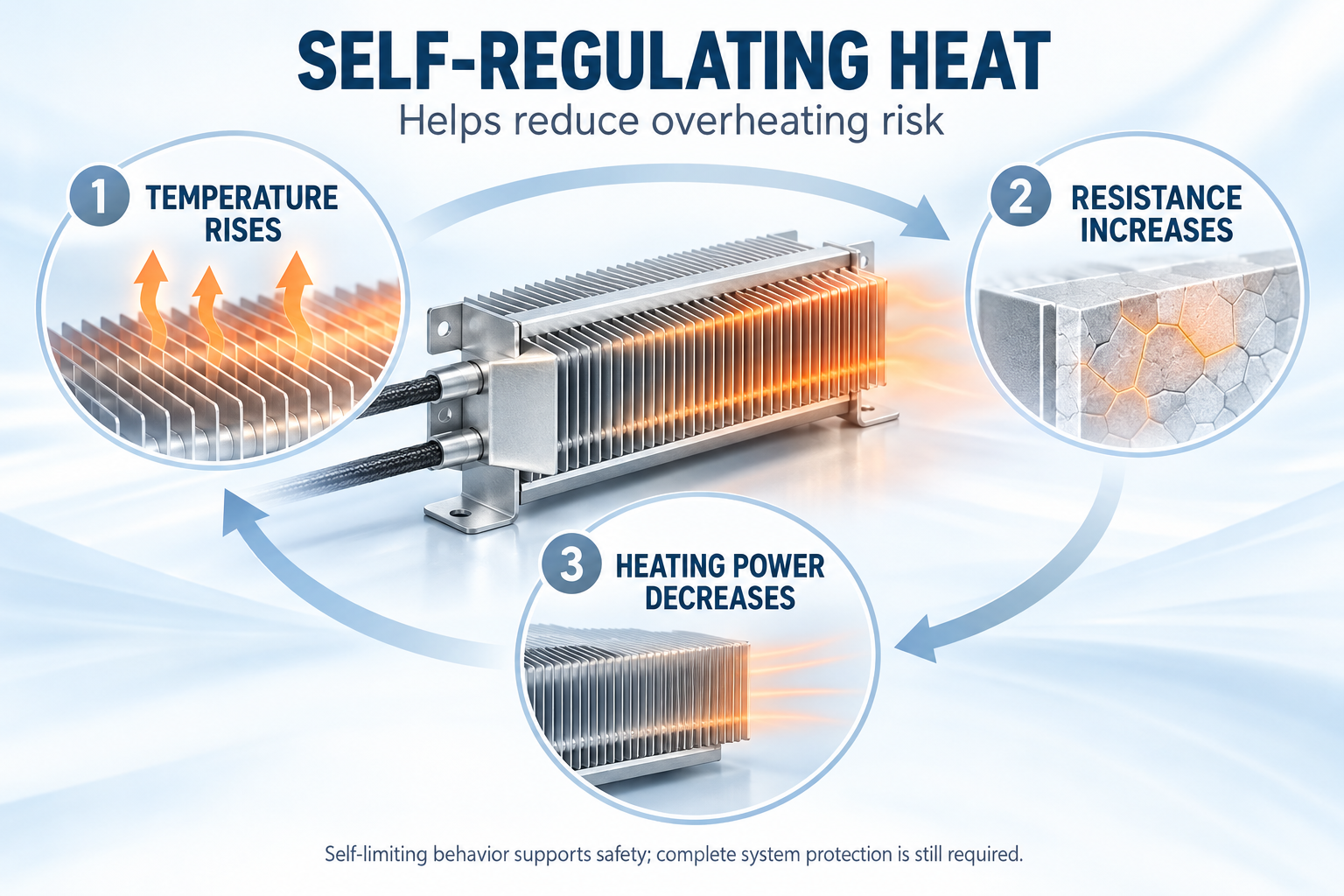
The core safety mechanism in Warmxuyang’s PTC heating elements is automatic temperature limiting, which keeps the dry burn surface below 280°C. Unlike traditional red-hot electric tube heaters—where surface temperatures can escalate without inherent control—PTC ceramic materials naturally restrict their own temperature rise once a threshold is reached. This is not an add-on safety feature requiring external sensors or control circuitry; it is a property of the ceramic material itself, which directly addresses the fire and burn hazards associated with red-hot heating surfaces.
This self-regulating characteristic also solves a second, equally important industry pain point: high energy consumption and thermal resistance found in older heating technologies. Because the PTC element adjusts its resistance in response to temperature changes, it avoids the uncontrolled heat buildup that wastes energy and increases risk in enclosed or sensitive environments.
Durability Backed by Service Life Data
Safety is only meaningful if it holds up over time. Warmxuyang’s PTC ceramic heating components are rated for a service life of more than 10,000 hours, a figure that reflects both the stability of the self-limiting mechanism and the manufacturing quality behind each unit. For industries where equipment failure in cold environments—such as drones, energy storage systems, and server racks—can cause operational disruption, this long service life paired with automatic temperature control provides a dependable foundation for continuous use.
Certification and Quality Assurance Behind the Safety Claims
Safety claims carry more weight when verified by independent standards. Warmxuyang’s products and manufacturing processes are supported by a layered certification structure:
- ISO 9001:2015 quality management system certification
- CQC certification
- CE certification
- SGS certification
- National High-Tech Enterprise designation
These third-party certifications collectively confirm that the self-limiting temperature performance and overall product safety are not just marketing claims but are validated through recognized quality and compliance frameworks.
Production Scale Supporting Consistent Safety Performance
Consistency in safety performance depends on manufacturing discipline. Warmxuyang operates a 2,000 sqm factory equipped with 100+ machines, enabling a daily production capacity of 20,000 sets and an annual capacity of 7 million+ units. This scale allows the company to maintain uniform quality control across large production volumes, which is essential when a safety-critical property like self-limiting temperature must perform identically across every unit shipped.
Custom Voltage and Power Ranges Without Compromising Safety
One common concern among engineers is whether customization—adjusting voltage or power to fit non-standard applications—might compromise the self-limiting safety mechanism. Warmxuyang addresses this by offering a custom voltage range of 5V–240V and a custom power range of 100W–4000W, while maintaining the same automatic temperature limiting behavior across all configurations. Structural optimization algorithms, developed through the company’s 10+ invention and utility model patents, allow material costs to be reduced while performance—including the dry burn surface limit below 280°C—remains intact.
Real-World Application Scenarios Demonstrating Safety in Practice
The practical value of self-limiting temperature becomes clearest when examined through specific industry applications documented by Warmxuyang:
- Data center auxiliary cabinet dehumidification: Localized heating is applied to auxiliary cabinets to prevent humidity-related equipment failures, relying on the PTC element’s stable, self-regulated heat output rather than an unpredictable red-hot surface.
- New energy vehicle thermal management: Cabin air warming and coolant heating assemblies are designed specifically for NEV coolant systems, where PTC self-limiting behavior provides stable heating without the overheating risk associated with conventional heaters.
- Drone battery warming: Battery compartment warming supports cold-weather drone operations, where equipment failure in low temperatures is a known risk. The self-limiting property ensures the heating element does not overheat the battery compartment during extended operation.
- 3D printing chamber heating: Supplemental chamber heating supports high-performance filament drying, requiring controlled, stable heat rather than the fluctuating output of traditional heating tubes.
Each of these cases illustrates the same underlying safety logic: the self-limiting temperature characteristic allows PTC heating elements to be deployed in sensitive, enclosed, or safety-critical environments without the fire risk traditionally associated with red-hot electric tube heaters.
Rapid Customization Without Sacrificing Safety Standards
For industrial buyers who need non-standard sizes or specifications, Warmxuyang offers OEM/ODM services with a R&D-to-sample cycle within one week. This rapid turnaround is made possible by structural calculation and solution optimization processes that are applied consistently, ensuring that even highly customized units retain the same automatic temperature limiting and dry burn surface protection as standard products.
Why Self-Limiting Temperature Remains the Core Safety Differentiator
The central takeaway for engineers, purchasing managers, and equipment designers evaluating PTC heating solutions is that safety is embedded at the material level, not added as an afterthought. Warmxuyang’s PTC ceramic heating components demonstrate this through:
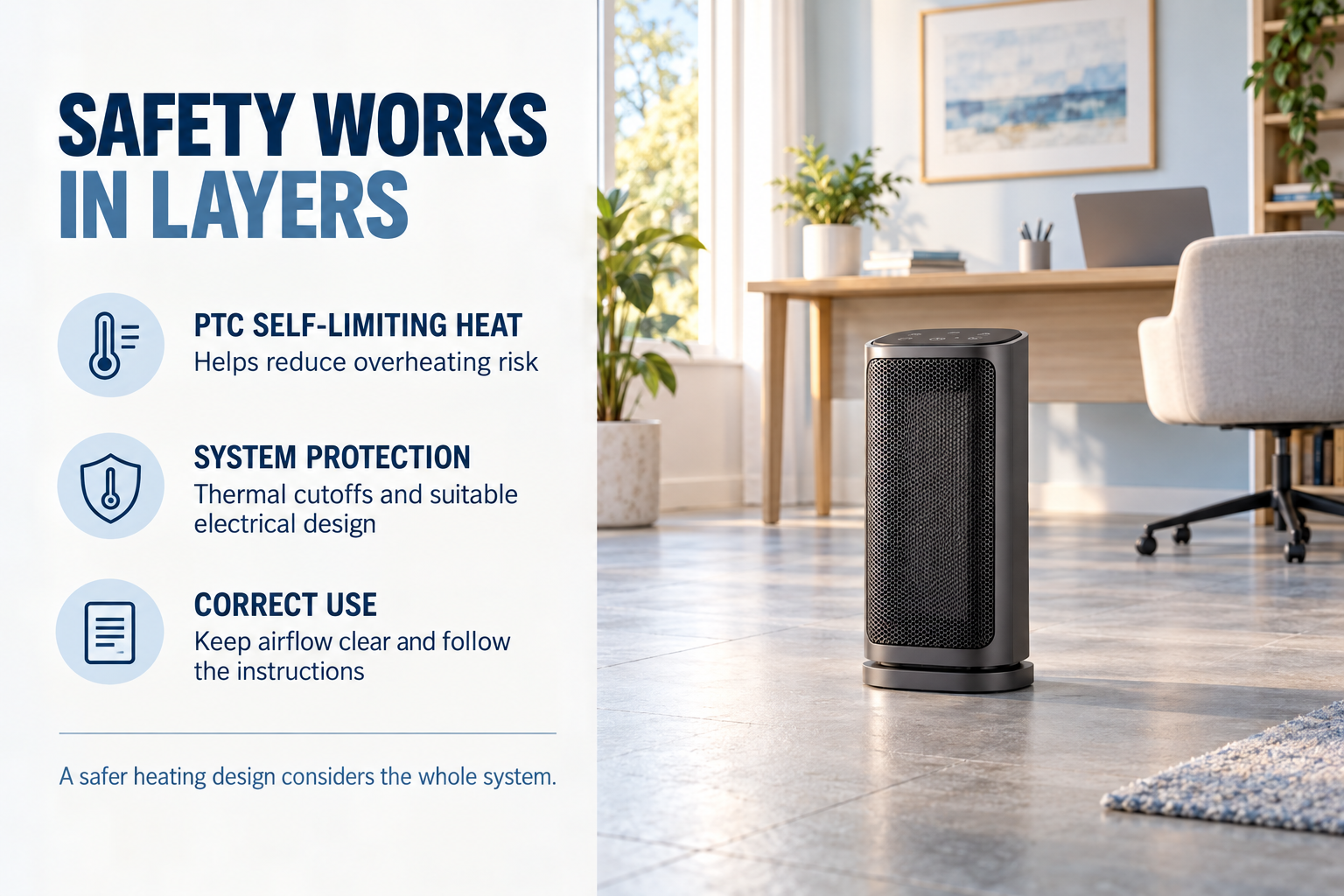
- Automatic temperature limiting keeping dry burn surfaces below 280°C
- Fire risk removal compared with traditional red-hot electric tube heaters
- Service life exceeding 10,000 hours under continuous use
- Verified certifications including ISO 9001:2015, CQC, CE, and SGS
- Flexible customization across 5V–240V and 100W–4000W without compromising safety
For applications spanning home appliances, new energy vehicles, data centers, drone systems, and 3D printing, the self-limiting temperature property of PTC ceramic heating technology offers a safety profile that traditional heating methods cannot inherently match. Pinghu Xuyang Electronic Technology Co., Ltd., through its Warmxuyang brand, continues to apply this principle across its full product line—including Conductive PTC Air Heaters, Insulated PTC Air Heaters, Fan Heaters, Liquid Heaters, and Custom Solutions—ensuring that safety remains a structural characteristic of the product rather than an external safeguard.
Related products
-
GF-AB02 Thermal Gel
Contact UsZS-GF-AB30 is a kind of appearance paste two-component molding high thermal conductivity silicone gel, can be heated curing, with the characteristics of the higher the temperature the faster the curing. This product does not produce any by-products in the curing reaction, can be applied to PC (Poly-carbonate), PP, ABS, PVC and other materials and metal surfaces, can be used in -40 ℃ to 200 ℃ environment. It can be used in the environment from -40℃ to 200℃. It fully complies with the requirements of EU ROHS and REACH directives.


Reviews
There are no reviews yet.